In this article
Cleft palate is one of the most common birth defects worldwide, occurring when the roof of the mouth does not fully close during fetal development. While the diagnosis can feel overwhelming, advances in surgical technique, multidisciplinary care, and speech therapy mean that children born with cleft palate can go on to live full, confident lives. This guide brings together everything you need to know — from the earliest causes and types, through feeding strategies and associated health conditions, to surgical aftercare and the transformative power of speech therapy.
What is cleft lip and palate?
During early pregnancy, different structures come together to form the face and mouth. Where a gap between structures occurs, this is called a cleft. A cleft can occur as part of a syndrome (‘syndromic’) or without an associated syndrome (‘non-syndromic’). Types of syndromes associated with cleft lip and palate can be found here: Related conditions and syndromes – CLAPA.
Around 1 in 700 babies in the UK are born with cleft lip and/or palate. The Cleft Registry and Audit Network (CRANE) monitors how many babies are born with cleft lip and/or palate every year. Their 2025 annual report states that 901 children were born with a cleft in 2024.
The type of cleft is based on the parts of the face and mouth affected.
- A cleft lip is a gap in the upper lip. One or both sides of the mouth can be affected. Where one side is affected, it is labelled ‘unilateral’; where both sides are affected, it is labelled ‘bilateral’.
- A cleft palate is a gap in the roof of the mouth. The front of the palate (area behind the lips and teeth) is called the hard palate. The back of the palate towards the throat is called the soft palate. A cleft can occur in the soft or hard palate, or both (CLAPA, 2026)
Usually, a cleft lip will be repaired at 3-6 months and a cleft palate will be repaired at 6-12 months (CLAPA, 2026).
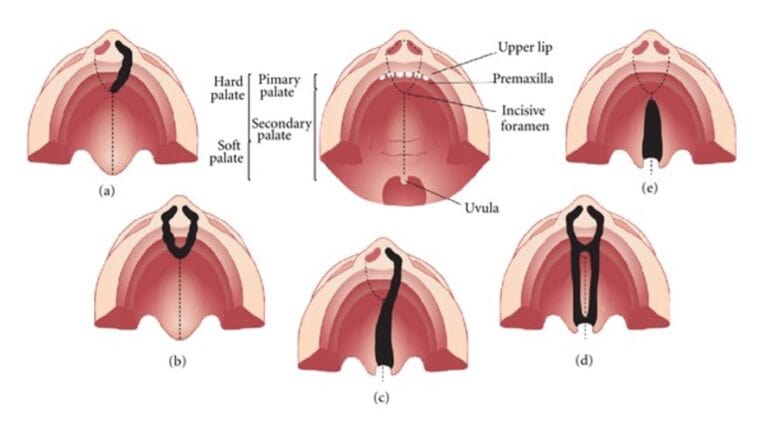
Figure 1: (a) Unilateral cleft lip only – one side of lip (b) Bilateral cleft lip only – both sides of lip (c) Unilateral cleft lip and palate – one side of lip with palate (d) Bilateral cleft lip and palate – both sides of lip with palate (e) Cleft palate only (Brito, Goes, Meira, Kobayashi, & Passos-bueno, 2012).
Cleft palate and speech
The role of the palate for speech
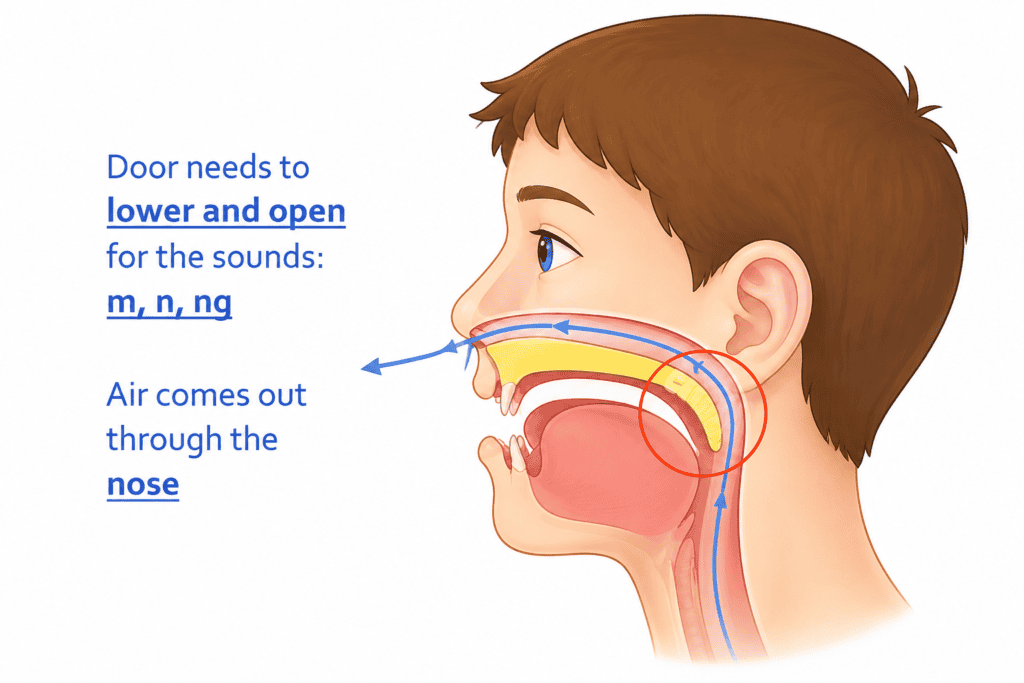
The palate acts like a door between the nose (nasal cavity) and mouth (oral cavity), directing air through the nose or through the mouth. Sounds made with airflow through the nose are called ‘nasal consonants’:
Sounds which are made with airflow through the mouth are called ‘oral pressure consonants’:
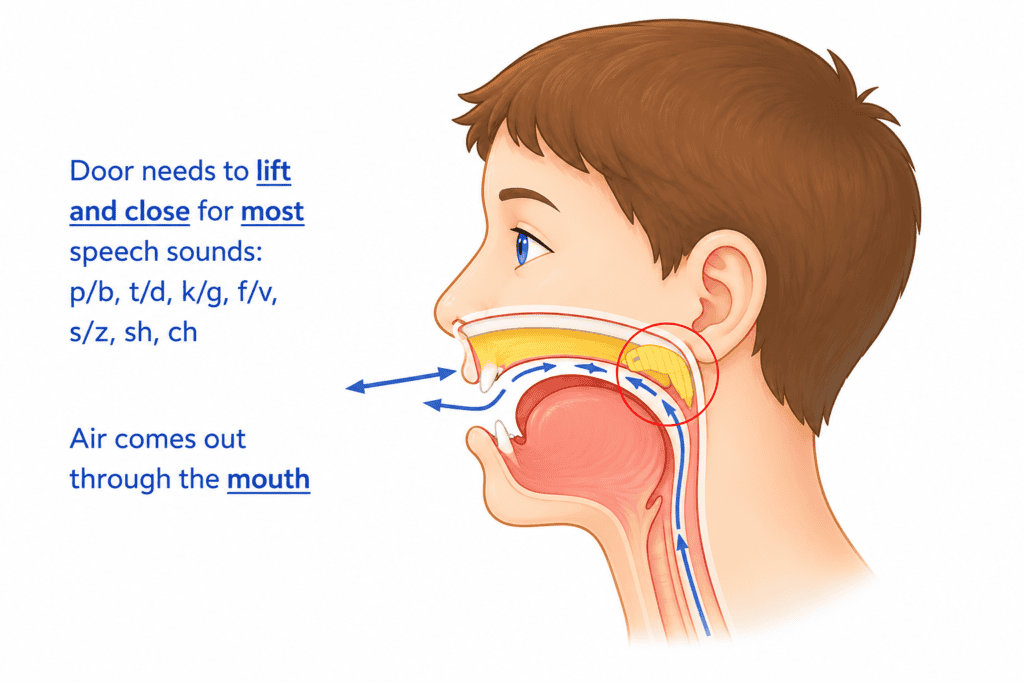
If you put your hand in front of your mouth whilst you say ‘p’, ‘f’, ‘s’ or any other oral pressure consonants, you should feel the air coming through your mouth on to your hand.
Watch this video by Speech Graphics (no affiliation with Chatter Labs) to see the cleft palate in action:
If the door cannot fully close, air will leak through the nose during speech. This is called Velopharyngeal Dysfunction.
After their first palate repair, many children will not need further surgery or speech therapy and develop speech that is considered ‘typical’. 57% of UK 5-year-olds born with cleft palate between 2014 and 2016 had speech which is considered typical (Crane Annual report, 2024)
Signs of Velopharyngeal Dysfunction include:
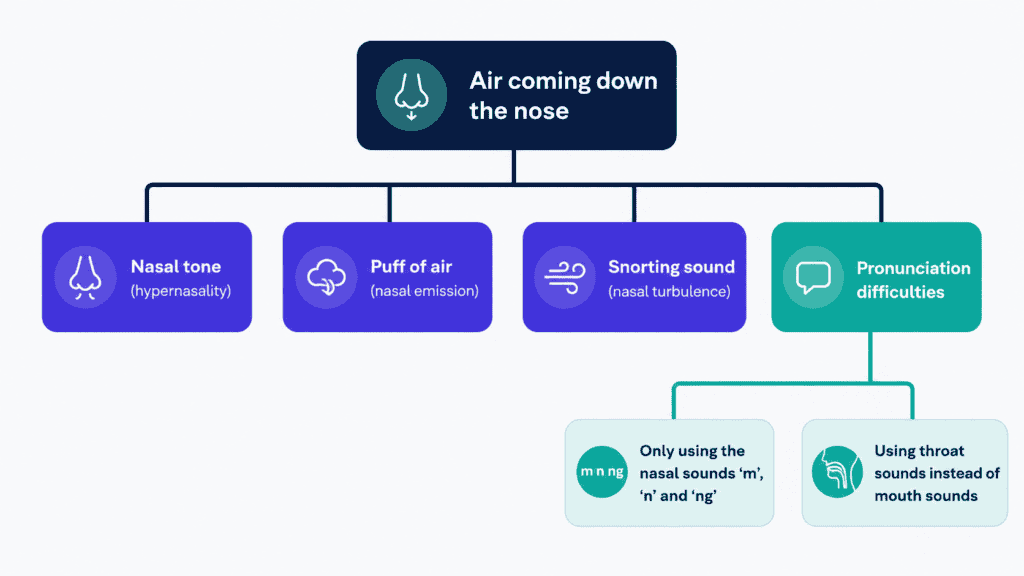
Hypernasal resonance (nasal tone), nasal emission and nasal turbulence: These features cannot be treated with therapy but vary in severity. People can have very mild hypernasality and emission/turbulence which is hardly noticeable and does not stop them from being understood. Moderate-severe hypernasality and emission/turbulence can make it very difficult to understand someone’s speech and can also impact their confidence and self-esteem.
For more information and example of hypernasal resonance, you can watch this video by LEADERSproject (no affiliation with Chatter Labs):
Active vs Passive Cleft Speech Characteristics (CSCs)
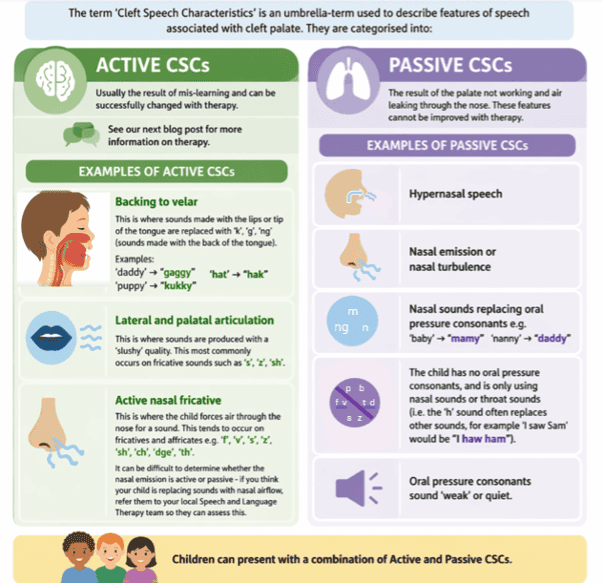
The term ‘Cleft Speech Characteristics’ is an umbrella-term used to describe features of speech associated with cleft palate. They are categorised into:
Active CSCs: Usually the result of mis-learning and can be successfully changed with therapy (See our next blog post for more information on therapy). Examples of Active CSCs include:
- Backing to velar – this is where sounds made with the lips or tip of the tongue are replaced with ‘k’, ‘g’, ‘ng’ (sounds made with the back of the tongue) e.g. ‘daddy’ -> “gaggy”, ‘hat’ -> “hak”, ‘puppy’ -> “kukky”.
- Lateral and palatal articulation – this is where sounds are produced with a ‘slushy’ quality. This most commonly occurs on fricative sounds such as ‘s’, ‘z’, ‘sh’.
- Active nasal fricative – this is where the child forces air through the nose for a sound. This tends to occur on fricatives and affricates e.g. ‘f’, ‘v’,‘s’, ‘z’, ‘sh’, ‘ch’, ‘dge’, ‘th’. It can be difficult to determine whether the nasal emission is active or passive – if you think your child is replacing sounds with nasal airflow, refer them to your local Speech and Language Therapy team so they can assess this.
Passive CSCs: The result of the palate not working and air leaking through the nose. These features cannot be improved with therapy. Passive CSCs include:
- Hypernasal speech
- Nasal emission or nasal turbulence
- Nasal sounds replacing oral pressure consonants e.g. ‘baby’ -> “mamy”, ‘nanny’ -> “daddy”.
- The child has no oral pressure consonants, and is only using nasal sounds or throat sounds (i.e. the ‘h’ sound often replaces other sounds, for example ‘I saw Sam’ would be “I haw ham”).
- Oral pressure consonants sound ‘weak’ or quiet.
The Cleft Palate Speech and Language Therapist
All children born with cleft lip and palate in the UK will be referred to a NHS Cleft Centre – for more information about the location of the centres, see: About NHS Cleft Services – CLAPA. For children with cleft palate, they will see the Cleft SLT team for routine reviews at different ages, usually starting from 18months up until they are 20 years old. Most Cleft SLT teams review children at the following ages: 18/24 months, 3 years old, 5 years old, 10 years old, 15 years old, 20 years old.
The Cleft Speech and Language Therapist (SLT) is similar to a detective. They conduct a speech assessment to identify whether the child presents with speech difficulties. If there is a problem with speech, they investigate the cause and whether this is related to the palate.
If the child presents with Cleft Speech Characteristics, the SLT must differentiate between Active and Passive Cleft Speech Characteristics. This will determine the management plan and whether the child requires therapy or possibly surgery.
If the child presents with passive CSCs which are having a significant functional or psychosocial impact on the child or young person (i.e. people cannot understand their speech, the hypernasality is making them self-conscious of their speech), they may have an x-ray called a lateral videofluoroscopy – this is a side-view of the nose, mouth and throat which captures the movement of the palate, tongue and back of the throat whilst the patient is talking.
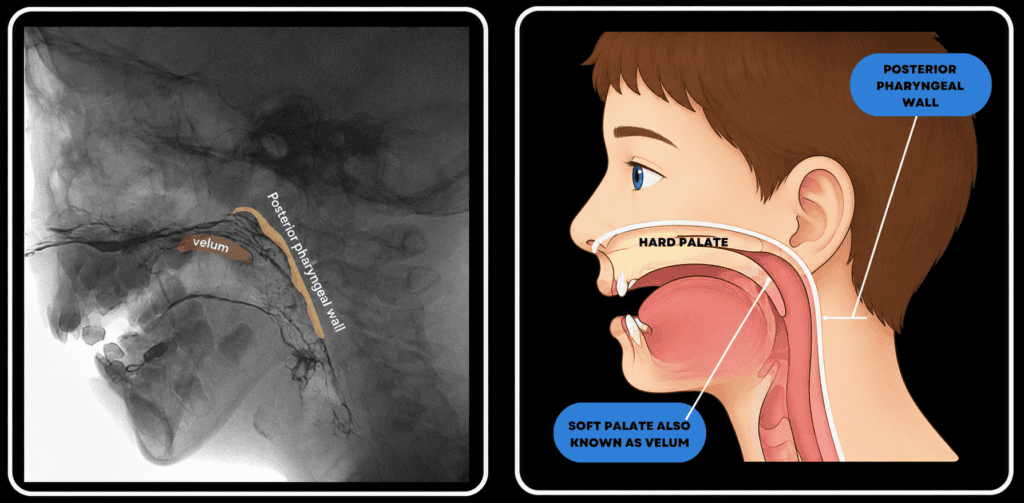
Figures 6: Lateral view on a velopharyngeal videofluoroscopy and illustration. Anatomical components of the velopharyngeal sphincter. Posterior pharyngeal wall and velum are shown (Valdes Banuelos et al., 2023).
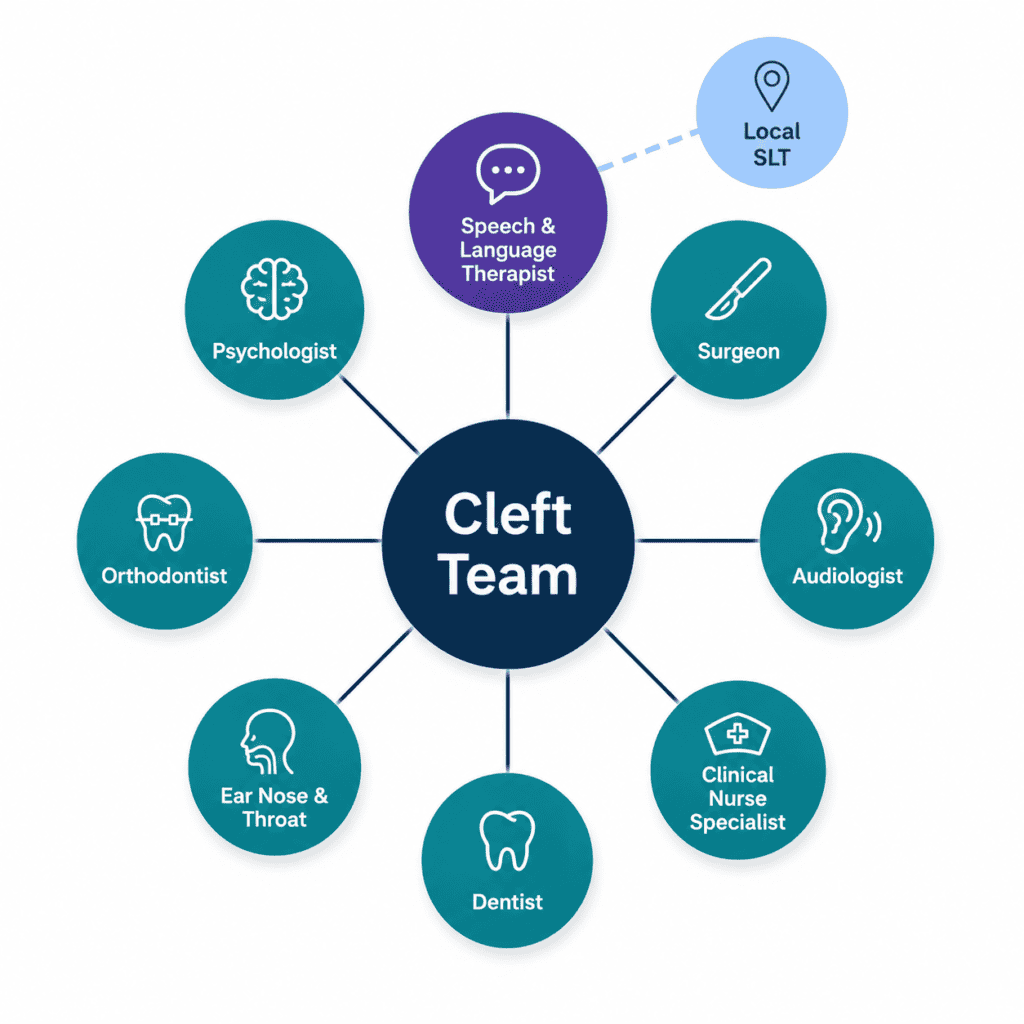
The Cleft Speech and Language Therapist works closely with other professionals, including:
- Cleft Surgeons
- Audiologists
- Ear, Nose and Throat (ENT) specialists
- Dentists and orthodontists
- Local SLTs
Non-cleft velopharyngeal dysfunction and Submucous Cleft Palate
Children without a cleft palate can also have velopharyngeal dysfunction.
Some of these children may have a submucous cleft palate. This is where the skin is intact, but there is a gap or misalignment between the muscles behind the skin. Because the gap is hidden, it is often difficult to detect a submucous cleft palate until children have developed more language and speech, often around 3-4 years old. When looking in the mouth, there can be visual signs of a submucous cleft palate, including:
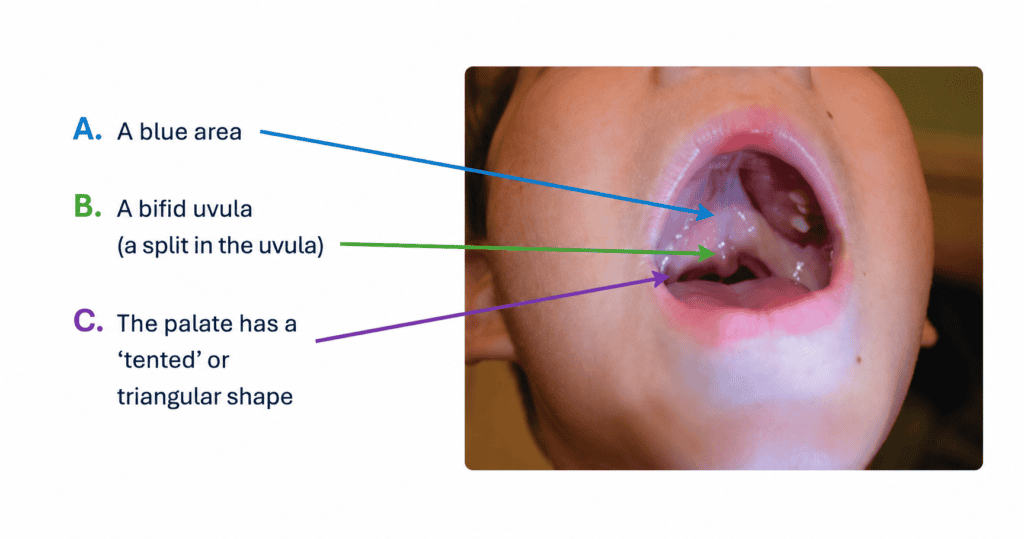
Figure 2 : Submucous Cleft Palate from Grames & Patel, 2016.
What to do if you have concerns about velopharyngeal dysfunction
All children born with a cleft palate in the UK should be under a NHS Cleft Service and will access regular reviews with a Cleft Speech and Language Therapist to monitor their palate function. If your child is known to a NHS Cleft Service and you have concerns about their speech, please contact your Cleft SLT team.
If your child or a child you are working with does not have an identified cleft palate but you have concerns about hypernasal speech and suspect velopharyngeal dysfunction (even if they do not have physical signs of a submucous cleft palate), it is very important they are referred to their local NHS Cleft Service for a full speech assessment. Find your local NHS Cleft Service here: About NHS Cleft Services – CLAPA. Local SLTs can contact their nearest NHS Cleft SLT team to discuss potential referrals.
References
Brito LA, Meira JG, Kobayashi GS, Passos-Bueno MR. Genetics and management of the patient with orofacial cleft. Plast Surg Int. 2012;2012:782821. doi: 10.1155/2012/782821. Epub 2012 Nov 1. PMID: 23213504; PMCID: PMC3503281.
Cleft Lip and Palate Association (CLAPA) (2026) https://clapa.com/
Cleft Registry and Audit Network (CRANE) (2024) ‘2024 Annual Report’. https://www.crane-database.org.uk/wp-content/uploads/2024/12/CRANE-2024-Annual-Report_V1_final.pdf
Grames, Lynn & Patel, Kamlesh. (2016). Current Practices and Controversies in Management of the Submucous Cleft Palate. Perspectives of the ASHA Special Interest Groups. 1. 59-69. 10.1044/persp1.SIG5.59.
J. Valdes Bañuelos, M. Cuadra, H. A. Cervantes Flores, F. Bravo Ontiveros. (2023). ‘Videofluoroscopic evaluation of velopharyngeal insufficiency: a quick guide for residents’ [Poster session]. ECR. https://dx.doi.org/10.26044/ecr2023/C-11198
Last modified: 15 June 2026
Disclaimer: This content is for educational purposes only and is not intended as medical, legal, or professional advice. Consult a qualified speech and language pathologists for guidance specific to your situation.